Prison101 Consulting


Pack With Confidence
Prison101™ in 60 Seconds
Packing for prison isn't about bringing everything you own. It's about bringing the few items that can make your transition easier while understanding that every correctional system has specific rules about what is and isn't permitted.
Many people make the mistake of packing too much, only to have items rejected or discarded upon arrival. Before you report, always verify the current property policies of the correctional system where you'll be incarcerated.
When in doubt, bring less, not more.
What You're Usually Allowed to Bring
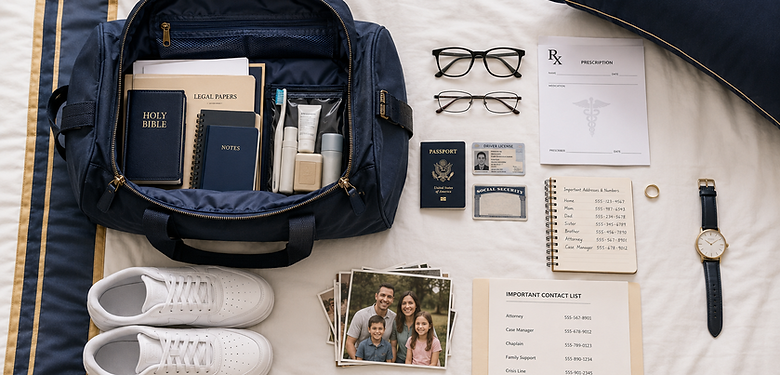
Although policies vary by jurisdiction, many correctional systems allow certain approved personal items, including:
-
Prescription eyeglasses
-
Prescription medications (in their original pharmacy containers)
-
Hearing aids
-
Dentures
-
Legal documents
-
Court paperwork
-
Government-issued identification
-
Contact information for family and attorneys
-
Wedding band (plain band only, where permitted)
-
Religious items approved by the institution
Always verify your institution's current policies before reporting.
Essential Documents to Keep Organized
Before reporting, prepare a folder containing copies of important documents.
These may include:
-
Judgment and sentencing documents
-
Identification
-
Medical records
-
Prescription information
-
Emergency contact information
-
Attorney contact information
-
Insurance information
-
Military records (if applicable)
-
Educational records (if applicable)
Leave copies with a trusted family member and keep digital copies whenever possible.
Prescription Medications
If you take prescription medication, don't assume the institution already has your medical history.
Before reporting:
-
Bring medications in their original labeled containers.
-
Carry a current list of all prescriptions.
-
Include dosage instructions.
-
Bring the prescribing physician's information.
-
Have copies of recent medical records if available.
Medical staff will determine what medications may continue while you're incarcerated.
What Not to Bring
Most institutions prohibit items such as:
-
Cell phones
-
Smart watches
-
Electronics
-
Tobacco products
-
Alcohol
-
Illegal drugs
-
Weapons of any kind
-
Large amounts of cash
-
Expensive jewelry
-
Unapproved food
-
Personal toiletries not specifically authorized
Attempting to bring prohibited items may delay processing or result in confiscation.
Clothing
If you're self-surrendering, wear simple, comfortable clothing unless your institution provides specific instructions.
Avoid:
-
Excessive jewelry
-
Designer accessories
-
Clothing with offensive language or graphics
-
Expensive shoes
-
Clothing that violates institutional dress codes
Remember that you'll typically change into institutional clothing shortly after arrival.
Less Is More
One of the biggest surprises for many people is how little they'll actually need during intake.
The correctional institution will issue clothing, bedding, hygiene items, identification, and other basic necessities according to its policies.
Your goal isn't to pack for comfort.
Your goal is to arrive prepared, organized, and compliant.
Prison101™ Pro Tip
Create a "Life Folder" before you report.
Leave copies of every important document with someone you trust, including identification, insurance information, financial records, legal paperwork, passwords, emergency contacts, and medical information.
If something unexpected happens after you're incarcerated, your family won't be scrambling to find critical documents.
Prison101™ Key Takeaway
Packing for prison isn't about bringing more.
It's about bringing the right things.
A small amount of preparation before reporting can prevent unnecessary stress, delays, and confusion during your first days of incarceration.
Need Personalized Guidance?
Every correctional system has different property rules, reporting procedures, and intake requirements.
Prison101 Consulting helps individuals and families prepare with confidence before incarceration.